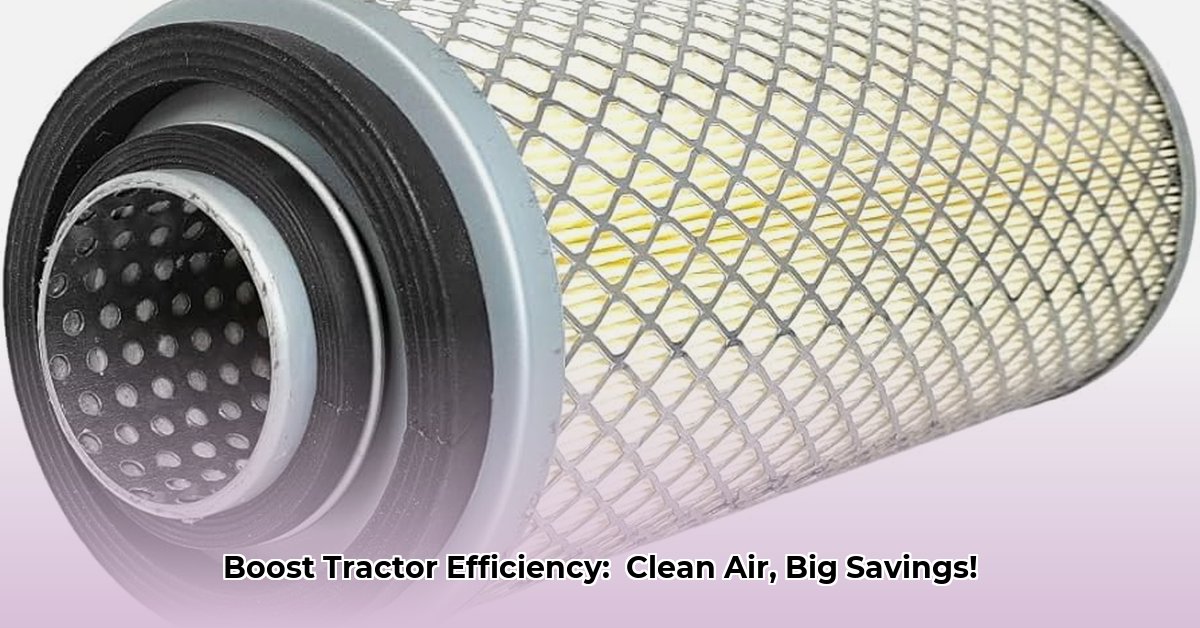
Maintaining your tractor's air filter is crucial for engine longevity, fuel efficiency, and environmental sustainability. A clean air filter ensures your tractor breathes clean air, leading to optimal performance and minimizing costly repairs. This comprehensive guide provides practical steps for choosing, maintaining, and disposing of your tractor's air filter responsibly. For more information on tractor parts, check out this helpful resource: Tractor Parts.
Choosing the Right Air Filter
Selecting the appropriate air filter is paramount for tractor performance and longevity. Two primary types exist: paper and synthetic. Paper filters, while more affordable, typically require more frequent replacements. Synthetic filters, although initially more expensive, offer extended lifespans and superior filtration, especially beneficial in dusty conditions. Did you know that a clogged air filter can reduce engine power by up to 15%?
| Filter Type | Pros | Cons | Ideal Operating Conditions |
|---|---|---|---|
| Paper | Affordable, readily available | Shorter lifespan, less efficient in dusty environments | Low-dust environments, occasional use |
| Synthetic | Longer lifespan, superior filtration, more durable | Higher initial cost | High-dust environments, frequent heavy use |
Your tractor's owner's manual provides specific recommendations for filter type and size. Ignoring these specifications can lead to engine damage and costly repairs. Always prioritize the manufacturer's guidelines to maintain optimal performance.
Regular Inspection and Maintenance
Regular inspection prevents costly repairs and downtime. Follow these steps for efficient maintenance:
- Locate the Air Filter: Consult your owner's manual for the precise location.
- Visual Inspection: Examine the filter for dirt, debris, tears, or damage. A visibly dirty filter needs immediate attention.
- Clogging Test: Gently tap the filter. Significant resistance indicates clogging and necessitates replacement.
- Cleaning or Replacement: If your filter is reusable (check your manual), clean it using compressed air; otherwise, replace it. Replacing a filter is significantly less expensive than engine repair.
- Proper Installation: Ensure the new filter is securely installed and correctly sealed to prevent air leaks.
Regular filter checks, ideally monthly or as needed (depending on usage and environmental conditions), are essential for optimal engine performance. Neglecting this simple step can lead to significant problems.
Sustainable Disposal Practices
Responsible disposal minimizes environmental impact. Many manufacturers offer recycling programs for used air filters. Alternatively, contact your local agricultural supply store or equipment dealer; they may have recycling options. If recycling isn't feasible, check local regulations for proper hazardous waste disposal, as some filters contain oil residue. Remember, responsible disposal is a small effort with large environmental benefits.
Troubleshooting Common Issues
Reduced engine power, rough idling, or increased fuel consumption often indicate air filter related problems. Check for:
- Incorrect Installation: Ensure the filter is correctly seated and sealed.
- Damaged Filter: Replace a torn or compromised filter immediately.
- Underlying Issues: If problems persist after filter replacement, consult a qualified mechanic to rule out other potential engine issues.
Long-Term Strategies: Investing in Efficiency and Sustainability
Investing in high-quality air filters reduces long-term costs and environmental impact. Consider:
- Premium Filters: While initial costs are higher, premium filters offer extended lifespans, reducing replacement frequency and waste.
- Sustainable Materials: Explore filters made from eco-friendly materials whenever possible.
- Cost-Benefit Analysis: Compare the long-term costs of various filters to find the most economically and environmentally sound solution for your needs.
Proactive maintenance saves money and resources while contributing to sustainable farming practices. Think of it as a small investment with substantial returns over the lifetime of your tractor.
Key Takeaways: Maintaining Peak Tractor Performance
- Regular air filter maintenance is vital for optimal tractor operation and fuel efficiency.
- Choosing the correct filter type depends on your tractor model and operational environment.
- Responsible filter disposal protects the environment and minimizes waste.
- Promptly addressing filter-related issues prevents major and costly engine damage.
- Investing in high-quality filters offers long-term cost savings and reduces your environmental footprint. By prioritizing air filter maintenance, you contribute to both economic and environmental sustainability.